
So what does the Concours d'Elegance of America do especially well? Here in the Motor City we love our American cars, and there were great examples of all sorts of American steel from before World War II. Let's take a look at the cars of the late 20s, the 30s, and the early 40s. I've arranged them by year and mixed the "popular" and "luxury" classes together, so that we can see the shifting designs and standards a bit more easily.

Let's start with an Essex Super Six, since I'm not quite sure of the year, though it's probably 1928 or 1929. Essex was a make of cars produced by Hudson, and their success helped to push other car manufacturers to provide a fully enclosed interior. Compare it to its late 20s competitors, and think about which car you'd rather travel in on a cold December night.
Believe it or not, Essex was the third most popular make of car sold in 1929 behind only Ford and Chevrolet. But by 1934 the Essex nameplate had been phased out completely as only the Hudson Terraplane remained of its line.

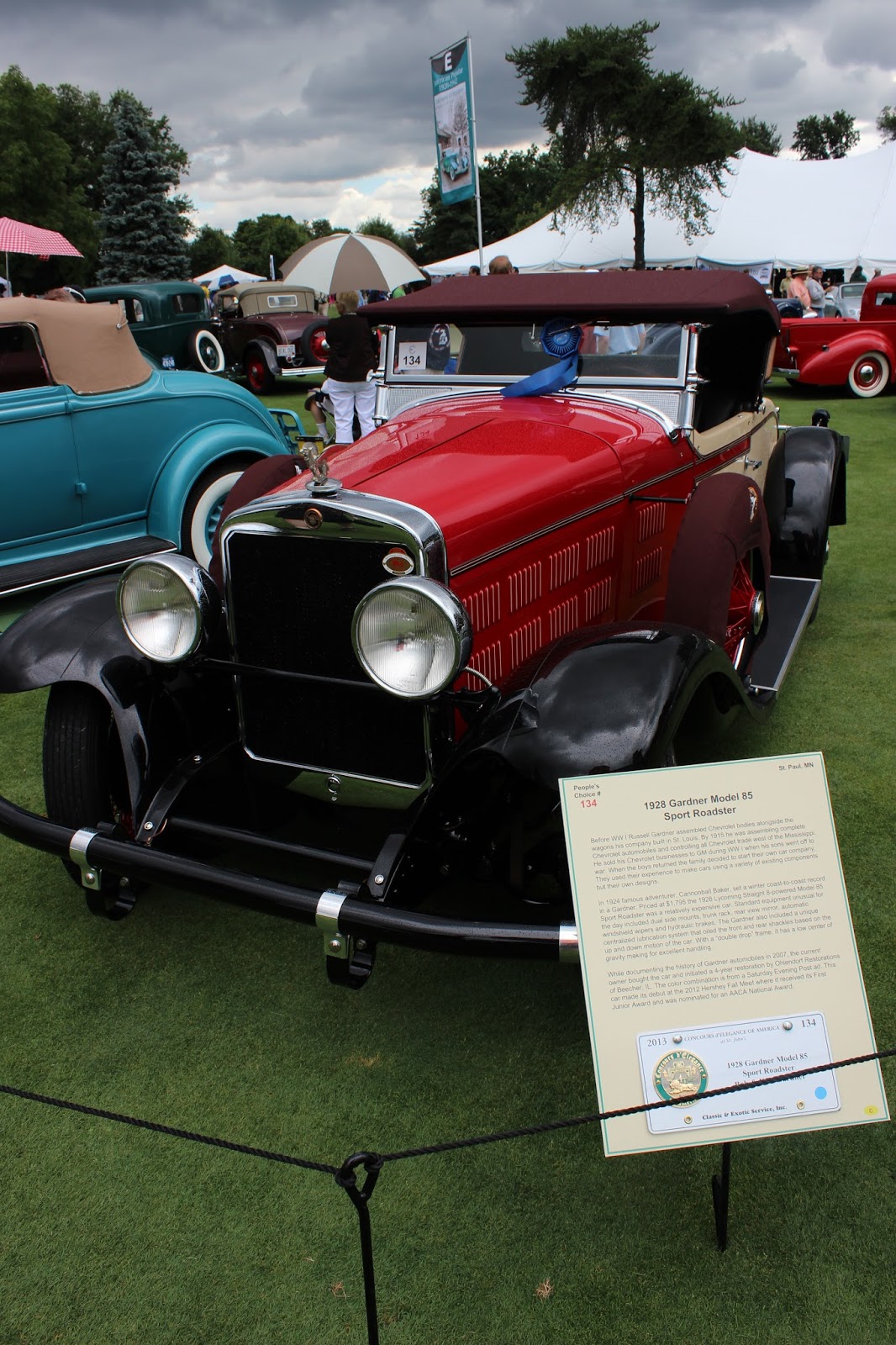
1928 Gardner Model 28 Sport Roadster. Gardners were made in St. Louis from 1920 to 1931 when the company folded, another automotive victim of the Great Depression.

1928 Cunningham V-8. Cunningham began making cars in 1896, but they, too, fell to the Great Depression. The Rochester, New York, company stopped making cars after 1931, though it kept making auto bodies until 1936 when it folded altogether.


1929 Stearns-Knight Model J Phaeton. Stearns-Knight was bought in 1925 by Willys, one of the comparatively few auto companies that did survive the Great Depression. But the Stearns-Knight luxury make didn't survive past 1929, despite one of the greatest radiator-cap designs of all time.


Speaking of Willys, here we have a 1929 Willys Knight 66B Plaidside Roadster by Griswold. As a new car it won 1st place in the 1929 New York Auto Show at Madison Square Garden.
Sure, it was displayed with the American-made cars, but somehow I feel as if this car should be Scottish.



The enormous culling of American automotive companies during the Great Depression sometimes feels to me like one of the "extinction events" that paleontologists study in the fossil record. If this seems to you like the sort of thing that could only happen in the far past, you might want to ask the owner of a Plymouth, Oldsmobile, Pontiac, Saturn, Mercury, Hummer, or Saab about his car from the days back before the Great Recession.


Here's a 1931 Lincoln KB. The K-series was a popular basis for luxury coachwork.

1932 Ford 18, the V-8 successor to the Model A.

1932 American Austin Series 275, the Mini of its day. It's mighty 4-cylinder, 46-cubic-inch engine put out a potent 14 HP, which worked out okay since it barely weighed 1,000 pounds.
This thing was cute as a bug's ear.


1932 Studebaker Rockne Deluxe Roadster. Studebaker began making carriages in the 1850s in South Bend, Indiana, which also the home of Notre Dame University. The Rockne series was named after legendary Notre Dame coach Knute Rockne, who died in March 1931.


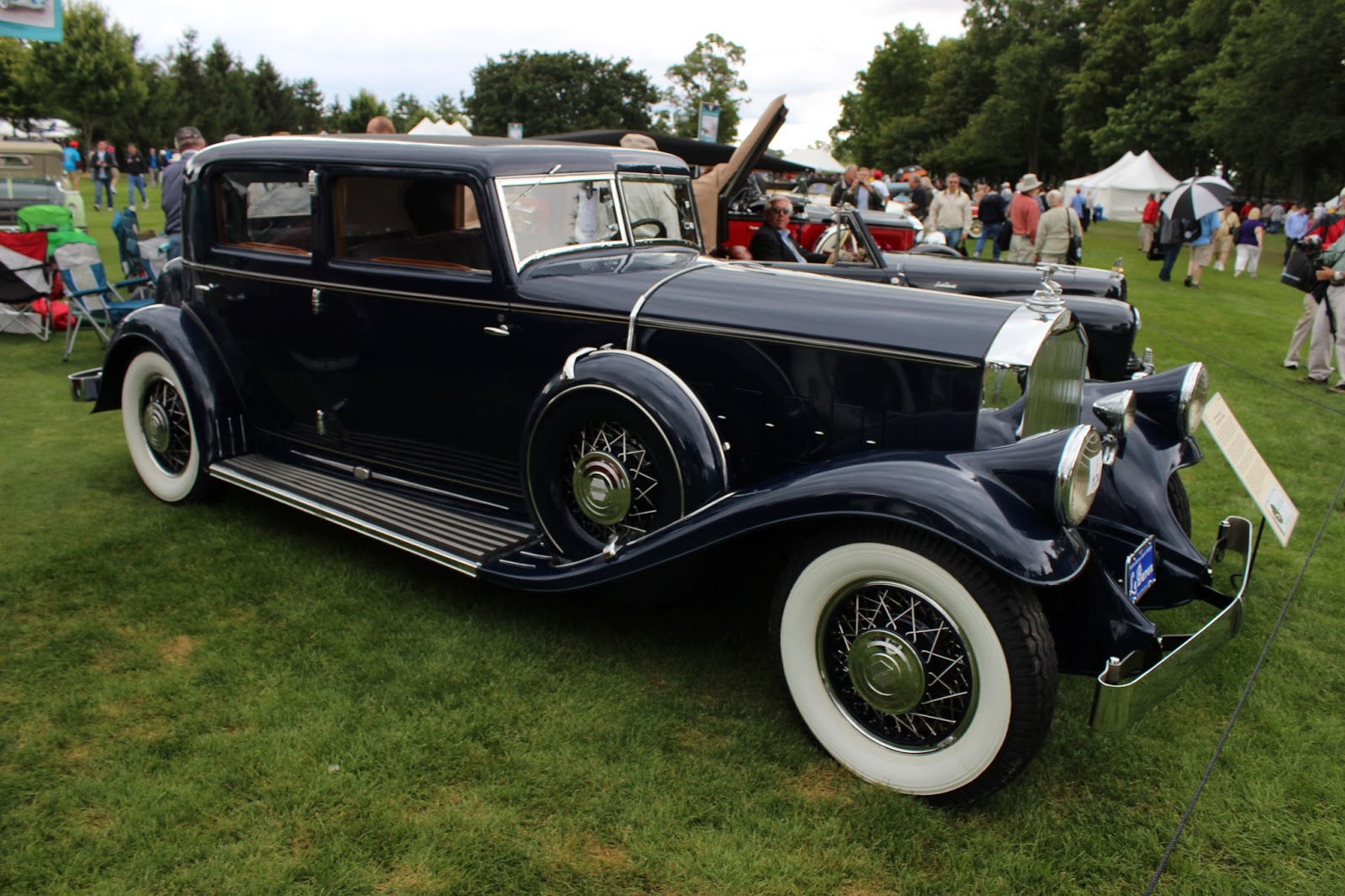
I'm pretty sure this is a 1933 Lincoln KB coachbuilt by LeBaron. Amid some of the slightly stodgier luxury cars, it looked especially built for speed.

1933 Chrysler Imperial Dual Cowl Phaeton by LeBaron. This was towards the end of Chrysler's coachbuilt era, a market undoubtedly hurt by the Great Depression.

1933 Lincoln KB Convertible Coupe by LeBaron.


1934 Pierce-Arrow Silver Arrow.

1934 Dodge DR Convertible Coupe.

A 1936 Plymouth Deluxe and a 1931 Hudson 8 Boat Tail Speedster by Murray.

The 1936 Ford 3-Window Coupe, the coupe that launched 10,000 hot rods.


1936 Cadillac V-16 Aerodynamic Coupe by Fleetwood. This is a biiiiiiig car. The Aerodynamic Coupes were powered by a 185-hp V-16, with a body design based on a concept car displayed at the 1933 World's Fair in Chicago.

1938 Oldsmobile L Series Coupe. You can really see the fenders becoming more fully incorporated into the body in this design. This feels to me closer to the cars of the 1950s than even the late 1920s.


1938 Lincoln K Cabriolet by Brunn. Lincoln's coachbuilding days were coming to an end by 1938, too, with only about 400 of these V-12 powered monsters sold that year.

1938 Buick Limousine, purchased in 1938 for 5,000 Rupees by the Maharajah of Jind in Haryana, India. Oh, the places this car has been.


1939 Graham Model 96, nicknamed the "Sharknose." I love the way the nose on this thing just sticks on out. "Hello, there! I'm coming into this intersection" it says. The design was a critical success but a sales disappointment.
Graham-Paige almost made it out of the Great Depression as an automobile manufacturer by cutting a variety of deals with some of the other teetering companies, including a deal with Huppmobile to build cars based on the very cool design of the Cord 810 and 812 after picking up Cord's tooling when Cord went under. (We'll talk a bit more about Cords in the next post.) Graham-Paige finally stopped making cars in late 1940, one of the final auto companies to shut down before World War II started.
But the story doesn't quite end there. Their recently mothballed factory was reopened for war production when the war began. Graham-Paige then got out of the motor-vehicle business for good when they sold off their automotive assets in 1947 to Kaiser-Frazer.
So what happened to Graham-Paige after they left the auto biz? After moving out of autos the company moved into investments and real estate, and eventually became ... the Madison Square Garden Corporation!

1940 Buick 81C Convertible Sedan.


1940 Packard Series 1806 Darrin Convertible. This car just oozes smooth.

Our final car today? This 1942 Lincoln Continental Cabriolet. This was pretty much the end of civilian car production until the end of World War II. When the auto manufacturers started making civilian cars again in 1946, this is almost exactly where they picked back up. As a point of comparison, check out this 1948 Buick Silver Streak.
And there you have it: American car design from just before the onset of the Great Depression to the nation's entry into World War II. I hope you enjoyed today's Patio Boat ride on the American roads of the first half of the 21st century.


