Friday, January 27, 2012
Newt-mania Runs Its Inevitable Course
As the Florida vote approaches on Tuesday, it seems a good time for another update on America's longest-running primetime reality show: the GOP Presidential Primary.
I spent a bit of time this week watching both Florida debates, then flipping around a few of the cable "news" networks afterwards. But rather than go into a cranky old man rant about the horror of what passes for journalism in 2012, here are a few quick impressions of what I saw in the debates, plus what I think we might see on Tuesday:
Mitt Romney -- Looked much, much better this week than he did in the previous debate appearances that I've seen. Romney added a new debate coach to his team, and the change seems to have paid great dividends for his debating style, which seemed much crisper and more pointed than it has prevous been. He also seemed much more at ease with the fact that he's incredibly wealthy. That may be an unplanned dividend for the Romney campaign from the release of his income tax information. He was trying to hard too obscure the fact that he only pays 13.9% of his vast income in federal taxes that it had to be a palpable relief to let the cat out of the bag.
This good week for Romney is the result of what getting thumped by Newt Gingrich will do for a candidate. It will make that candidate take a good long look in the mirror, then make genuine changes to his campaign. I doubt the Romney campaign would've changed anything if it wasn't for their South Carolina debacle, so this is an excellent example of how a competitive primary can create a stronger general-election candidate.
Romney looks set to pull out of his campaign tailspin, and head on to a major victory in Florida, where his advantages in money and organizational support already gave him a major edge. A disaster here might've mortally wounded the Romney campaign, but as long as he pulls out a Florida victory, he should be well positioned for smooth sailing the rest of the way.
P.S. Note to Mitt: if you think you're making any sense when you try to explain why Romneycare in Massachussets is any different than the federal Romneycare that Obama signed into law ... you're the only one who even claims to think that. And we all know that you're smart enough to know that there's no substantial difference, so it doesn't come across well at all.
Newt Gingrich -- Admittedly, Romney's job this week was pretty easy. All he had to do was point to the next podium and say, "Ladies and gentlemen, may I remind you that this is Newt Gingrich."
The GOP's second flirtation with Newt seems to be ending as quickly as the first. This is a pretty well-documented pattern at this point. The rise comes when Newt gets down in the polls and comes out guns-a-blazin'. The Republican base loves the fight they see out of him and turn en masse to him as the anti-Romney. Then the GOP's elected officials and party leaders start working to head off what they see as an utter disaster looming in November if Gingrich is at the top of the ballot.
Worst of all for Gingrich's campaign, Newt plays into this by replacing the Angry, Bitter Newt that voters love with Pompous, Pedantic, Professorial Newt ... and that's the guy who was on display in these two debates. The only thing left in all America that Republicans and Democrats agree on is that everybody hates Pompous, Pedantic, Professorial Newt.
What will be interesting now will be to see if his sudden reversal of fortune leads Gingrich to restore the scorched-Earth campaigning style that is really his only chance to win this nomination. His SuperPAC is apparently launching $6 million in advertising over the next few days, so the scorched Earth campaign may be back. Whether it works after his drubbing in the debates is another matter.
P.S. Note to Newt: if you get housed by Mitt Romney in two consecutive debates with the nomination on the line, you may want to rethink the whole "I will crush Obama by engaging him in seven three-hour long Lincoln/Douglas debates" strategy. That lunar colony seems more likely.
Rick Santorum -- I continue to be astonished that Santorum didn't emerge as the anti-Romney after Iowa. I suspect that it speaks more to his lack of resources and experience with a national campaign than anything else.
Santorum did everything he needed to do to take over from Gingrich as the anti-Romney if this second Gingrich resurgence craters as badly as the first one did. Santorum's campaign doesn't plan to spend any money on TV ads in Florida, so as to make itself more financialy competitive in the caucuses in Maine and Nevada (Sat., Feb. 4) and the caucuses in Colorado and Minnesota (Tue., Feb. 7). This strikes me as a very smart strategy. I also think that staying out of the Romney-Gingrich fracas will pay dividends for Santorum on Tuesday because he may be the only clean man standing after a weekend of epic mudslinging plays out.
If I had to make a prediction now -- and it's my blog, so I can make whatever darn predictions I want, darn it! -- it would be that Santorum looks pretty strong by Super Tuesday (11 primaries on March 6) and that he may be carrying Newt Gingrich's endorsement by then. If Gingrich drops out of the race by then, Santorum could give Romney a respectable run at the polls, though he won't have the organizational and resource strength to ultimately defeat Romney for the nomination.
Note to Rick: Eh, you did fine this week. You don't need my advice right now. You need $20 million in campaign donations.
Ron Paul -- Is soldiering on bravely, but obviously at a disadvantage in a large state with a closed primary, since his libertarian and Democratic supporters are shut out and his web-based campaigning tends to get shouted down by a flood of TV ads. After Florida I would bet that his organization concentrates on the various caucuses where their enthusiastic base has a better chance to make an impact in their final delegate count.
Note to Ron: Please stay in the race. The other three guys obviously need somebody willing to point out that their budget math doesn't add up.
My Bold Prediction for Florida (retail value: $0.02.):
Romney: 38%
Gingrich: 27%
Santorum: 24% (<--This would be the big surprise.)
Paul: 11%

Monday, January 23, 2012
Indy Colts Haiku: Conference Championships Edition
... in which our intrepid haiku correspondent consoles herself with the belief that if she blurs her vision a bit when she watches this year's Super Bowl, one goofy-looking QB named Manning wearing a blue-and-white shirt will be just as good as any other.
Super Bowl XLVI At The Petroleum Palace: A Different Man(ning) For The Job
Baby Brudder to
Represent; Captain Comeback
Gets Colts fans' lament.
Super Bowl XLVI At The Petroleum Palace: A Different Man(ning) For The Job
Baby Brudder to
Represent; Captain Comeback
Gets Colts fans' lament.
Sunday, January 22, 2012
The GOP Presidential Primary: The Newt-Pocalypse
This week's events in the Republican presidential primary made it official. The Republican presidential primary has replaced "American Idol" and "Survivor" as America's favorite reality TV show. Until Monday the punditocracy was complaining that the race lacked excitement and that Mitt Romney's nomination had become a foregone conclusion. Then we saw four days of campaign higgledy-piggledy that will go down in the annals of American politics. After two debates, two dropouts and endorsements, one ex-wife, a fifteen-percent tax estimate, and an Iowa recount, Newt Gingrich stood triumphant at the top of the Palmetto State pack.
Here are yesterday's results from South Carolina, and a bit about the state of each campaign:
Candidate (Votes, Percent, Delegates)
Newt Gingrich (243,153, 40.4%, 23 delegates) - Gingrich won convincingly in the statewide contest, and swept every Congressional district to secure every delegate that was up for grabs. Whatever else happens, Gingrich's one-week comeback from a double-digit deficit in the polls to a double-digit victory in the actual election will forever be the stuff of campaign legend -- especially given the ex-wife scandal that only seemed to fuel his momentum. (It may also give an entire generation of politicians who are doomed to a thumping on Election Day false hope, but that'll be their problem, not Newt's.)
So, what happened? This result seems to have validated two theories about this year's election. The Anybody-But-Romney theory is alive and well. There's a corollary to that theory. The Republican base has been energized by their opposition to Obama and emboldened by the success of Tea Party candidates in 2010. They are in no mood for a polite debate of issues and policies this Fall. They want a fight, and Gingrich's combative stance in this week's debates played perfectly to that zeitgeist.
So what happens next? If Gingrich can maintain his edge over Santorum in Florida, there's a very good chance that in another two weeks he will be standing alone as the only Anybody-But-Romney still in the race. But Gingrich also has some structural problems in his campaign that will work against him. He failed to qualify for the ballots in some states -- Virginia and Missouri are the larger ones I've heard about so far -- which will likely to hand some large delegate counts over to Romney by default. That speaks to the lack of solid organization for Gingrich in many states, a problem that will worsen as the state-by-state, week-by-week nature of the primary process comes to the fore.
And though Gingrich was able to stand brilliantly atop his baggage in South Carolina, that pile of baggage can get awfully heavy as the primary campaign continues on. Voters in Florida (Jan. 31), Maine and Nevada (Feb. 4), and Colorado and Minnesota (Feb. 7) are about to get a SuperPAC-sized dose of reminders about Gingrich's past. The upside for the GOP in Gingrich is that his past is so well known and so well publicized that it seems unlikely that the electorate will be shocked by anything new.
Mitt Romney (167,279, 27.8%, 0 delegates) — Romney fell from a double-digit lead a week ago to a failure to secure even a single delegate. We've all heard the well worn saying that you learn more from failure than success. But the most important thing about learning from failure is that if you pay attention you will learn the lessons you didn't want to learn or didn't think you needed to learn. If you don't pay attention, you will learn the wrong lesson and will soon enough get another opportunity to learn the lesson you should have learned.
Until this week I didn't think that anything Romney would do in this campaign would be interesting. Now I think that Romney's campaign has suddenly become the most interesting campaign because there's a truly pivotal opportunity for him to learn either the right lesson or the wrong lesson from Saturday's results.
Romney's decision not to release tax returns emerged as a major issue this week, especially after he said that he paid about a 15% rate and dismissed the money he earned from speaking fees as "not very much" when it turned out to be nearly $375,000, an amount that very few Americans would characterize as "not very much."
The reason I think this is especially interesting is that I think Mitt Romney is about to learn the wrong lesson from this week's collapse. This is what Romney had to say this morning in a Fox News interview in which he said that this week he will release his 2010 tax returns and an early estimate of his 2011 returns:
"I know people will try and find something, but we pay full, fair taxes," Mr. Romney said. He said voters would see that he pays a "substantial amount" in taxes and had tithed to his church.
This sounds to me as if Mitt Romney learned the wrong lesson from this week's tax-return kerfluffle. The reason that gaffes and quotes out of context stick to a candidate is not because of the gaffe itself. All of these candidates have to talk non-stop for twelve months, so they're inevitably going to say something that sounds dumb. These things only stick to a candidate when voters think it encapsulates a basic flaw in the candidate.
In Mitt Romney's case, I don't think anybody believes he cheated on his taxes or broke the federal tax code, no matter how many Cayman Island banks may have been involved. The reason the tax-return issue sticks to Romney is because the perception has grown that he is so wealthy and so insulated that he doesn't understand the issues of everyday Americans. That perception is the reason it sticks with voters when Romney refers to himself as "unemployed", says "I like to fire people," or offers up a $10,000 bet during a debate. This is also why Romney's attempts to come across as a genuine man-of-the-people instead come across as inauthentic, a problem that increases the perception that Mitt Romney doesn't believe what he says on issues such as health-care reform or abortion.
In this case, a lot of Republican voters who are paying a considerably higher tax rate than 15% have begun to think that Mitt Romney doesn't really understand their anger at the tax code, since the tax code seems favor him.
So if I had one piece of good campaign advice to offer up to Mitt Romney this week it would be this: stop pretending that you aren't enormously wealthy. Americans like and admire wealthy people, even when they go so far as to be obnoxious about their wealth. Just ask Donald Trump!
Instead, Romney has developed a habit of insisting that people want him to apologize for his wealth. The truth is that nobody wants Mitt Romney to apologize for being wealthy. Mitt Romney's wealth isn't his problem. His inauthenticity is his problem. He would do better if he started showing up to every single campaign event in a chauffered Rolls-Royce, wearing a three-piece suit, lighting cigars with hundred dollar bills, and reminding people that he's a very smart man who made a vast fortune for himself and his investors. He could at least then make a plausible case that if he created that sort of corporate wealth when he was in charge of Bain Capital, he could do the same for the entire nation if he was President of the United States.
The politics of belief are enormously important in campaigns. People will vote for a candidate if they think he believes what he says even if they don't agree with him on many or most of the policy issues. As voters it is enormously important to us that we elect officials who are being honest with us. And all the consultants and all the campaign ads in the world can't create that in a candidate.
If Mitt Romney does not understand this, he should know that Newt Gingrich understands this very much and also understands how to capitalize on it.
Despite all of that, I still think Mitt Romney is very likely to ultimately win the nomination. One of the best reasons was stated clearly this morning by George Will today on ABC's "This Week" show:
"Here's a small sliver of a silver lining for Mitt Romney. All across the country this morning people are waking up who are running for office as Republicans -- from dog-catcher to Senate -- and they are saying, 'Good God, Newt Gingrich might be at the top of this ticket.' And that can't make them happy."
Romney still has all the advantages of establishment support, a well constructed campaign apparatus that reaches across all 50 states, and personal wealth that he can call on if the chips are down. He may very well emerge as a much stronger nominee if he learns the right lessons from his failure in South Carolina.
Rick Santorum (102,055, 17.0%, 0 delegates) — My money would have been on Santorum to emerge as the Anybody-But-Romney candidate, mostly based on all of the negatives that Gingrich brings with him. Finishing a distant third in South Carolina didn't help him, but his narrow post-recount victory in Iowa gives him a good case to continue on through Florida, Maine, Nevada, Colorado, and Minnesota. If he hasn't won another state after those contests, there will be considerable pressure on him to depart the race.
Gingrich has already shown the ability to fall in the polls as quickly as he has risen, so hanging in and waiting to see what happens seems to me to be a very reasonable strategy for Santorum.
Ron Paul (77,993, 13.0%, 0 delegates) — His 13% in South Carolina seems likely to be a reflection of his future primary tallies, though that could change considerably in states like Virginia and Missouri in which he and Romney may be the only remaining candidates on the ballot. He seems much more likely to do well in caucus states where his enthusiastic Libertarian base may form a greater percentage of the vote, and that is likely to be where we see him concentrate his efforts.
Herman Cain (6,324, 1.1%, 0 delegates) — About 6,000 votes of this total is the proxy vote for Steven Colbert's pseudo-campaign, which has taken aim at the current campaign finance rules. I'm surprised the total was this low, even given the confusing "Vote Cain for Colbert" methodology. The low Cain/Colbert vote total seems to be an indication that the voters in South Carolina took the actual race at the top very seriously. It's also likely an indicator that Independents and Democrats who did show up to vote in the GOP contest thought their vote was better directed among the genuine candidates.
Rick Perry (2,494, 0.4%, 0 delegates) — Perry headed back to Texas and endorsed Gingrich. This endorsement may have done Gingrich more good than just handing over the five percent or so of voters who still favored Perry. Perry's endorsement added significantly to the appearance that Gingrich has emerged as the genuine Anybody-But-Romney candidate. Frankly, I would've expected Perry's nomination to go to Santorum, since their platforms have been so similar. I can't help but wonder what would've happened this week had Perry endorsed Santorum instead.
Jon Huntsman (1,161, 0.2%, 0 delegates) — Huntsman pulled out of the race and endorsed Romney earlier this week. That was about the only piece of good news for Mitt Romney this week. Just imagine: without Huntsman's endorsement Romney could've finished even farther behind Gingrich!
Michele Bachmann (494, 0.1%, 0 delegates) — She must be sitting at home in the midst of a Minnesota winter, dreaming of the warmth of the Florida campaign, and thinking, "Why Newt? Why not me?"
Gary Johnson (213, 0.0%, 0 delegates) — Pulled out of the Republican primary in December to run for the Libertarian nomination. I can't help but wonder if his vote total yesterday means that 213 Libertarians in South Carolina don't know how to spell "Ron Paul."
And that's the South Carolina wrap-up. What will happen in Florida? I don't know, and neither does anybody else. That's why this is such a fascinating campaign!
Friday, January 20, 2012
Some of My Favorite Photos of 2011
I was looking for a photo from this Summer and realized that I was really a pretty neglectful photoblogger and photo-Facebooker for much of this year, especially during the Spring and Summer. The funny thing is that it wasn't due to a lack of photos -- we have about 2,500 photos from 2011 sitting on my hard drive -- it was just a matter of taking the time to sort through them to pull out a few of the best. So, I went through this year's photo folders and pulled out some of my favorites. Monique took most of them, so if you see one you really like in here, the odds are good that she deserves the credit.
Be forewarned, there are an astonishing 43 photos in this post. Frankly, I could've run the count up to a hundred. Looking them all over again, one thing was clear: we had a lot of good times in 2011. Here's some of the best evidence...

Okay, this one's cheating since it's from the very end of 2010. It's a Very Magee Christmas in my Dad's front yard! Pottersville, New York.

Monique in St. Thomas, Virgin Islands.

John sailing with friends off Tortola in the Sir Francis Drake Channel.

Monique in St. Thomas, Virgin Islands.

John in St. Thomas, Virgin Islands.

Katie the Beagle enjoying the special pillow that Monique made for her, so that her head would have a soft spot when she flops out of her bed. Not that Katie the Beagle is a spoiled dog or anything.

Zoe on Casper Mountain, Wyoming.

Cathy, Zoe, Uncle John, and Mike enjoying the successful construction of the new bike trailer. Casper, Wyoming. (Note Zoe's stylin' set of rabbit ears.)

Zoe the gardener. Casper, Wyoming.

Mike standing at the edge of an abyss while overflow water from Spring flooding roars into a canyon. Near Casper, Wyoming.

Roses and peonies by our decrepit picket fence. Wolverine Lake, Michigan.

Stella sunbathing on our dock. Wolverine Lake, Michigan.

Tiki Night fireworks. Wolverine Lake, Michigan.

The French car-wash crew (Malcolm and Henry) in the MGB. Wolverine Lake, Michigan.

Malcolm, Stella, Ann, Henry, and Michelle (left-to-right) at the fair. Wolverine Lake, Michigan.

Fun in the sun with Malcolm, Henry, Anna, and Lexi (left-to-right.) Wolverine Lake, Michigan.

John and Malcolm head off for high-speed adventures. Wolverine Lake, Michigan.

Sigh. Wendy and her new ski boat getting towed back to the dock. Wolverine Lake, Michigan.

The car-wash crew: John, Malcolm, and Henry (left-to-right). Wolverine Lake, Michigan.

And how shiny did the car-wash crew get the MGB? I give you "Michelle: Self-Portrait in MGB Hood." Wolverine Lake, Michigan.

Another fine reflection upon the good work done by my car-wash assistants. Wolverine Lake, Michigan.
(Michelle took a lot of great car-reflection photos this year, but I don't have them all on my hard drive. Michelle, if you read this and send me some of those really cool ones you took at the Concours d'Elegance, I'll add them to this post.)

Monique and Michelle -- probably rehearsing the "Sisters" number from "White Christmas." Wolverine Lake, Michigan.

Arsen and Katie the Beagle on the boardwalk. Wolverine Lake, Michigan.

Babs and Michelle standing in our kitchen. What I especially like about this photo is that it looks like a graceful dance pose, but in reality they are just startled to look up and realize that our skylight is raining on them. Wolverine Lake, Michigan.

John and Babs head off for high-speed adventures. Wolverine Lake, Michigan.

Monique and Katie the Beagle head off for low-speed adventures. Wolverine Lake, Michigan.

Brigitte, Babs, Michelle, and Monique (bottom-to-top). Wolverine Lake, Michigan.

Brigitte and Stella. Grosse Pointe, Michigan.

This photo of Arsen about to make a point still cracks me up. Traverse City, Michigan.

John was a wee bit tired after the rugby game. Traverse City, Michigan.

Arsen staring up from galley of the tall sailing ship Manitou. Traverse City, Michigan.

Monique and John having top-down fun in the FUN MG. Sleeping Bear Dunes, Michigan.

Morning glories. Wolverine Lake, Michigan.

Fall colors. Adirondack Mountains, New York.

The lake of my childhood. Loon Lake, New York.

On the fall colors cruise with the Windsor-Detroit MG Club. Near Plymouth, Michigan.

2011 Corvette Grand Sport vs. 1976 MG MGB Roadster. Wolverine Lake, Michigan.

Proof that a new Corvette is a chick magnet. Wolverine Lake, Michigan.

Last pontoon cruise of the year. Wolverine Lake, Michigan.

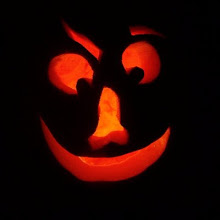
John's self-portrait in pumpkin. Wolverine Lake, Michigan.

Katie the Beagle helps Monique to install our new hardwood floor. Wolverine Lake, Michigan.

John does battle behind the dash of the MGB. Wolverine Lake, Michigan.

Katie the Beagle stands atop John on New Year's Eve to greet 2012. Wolverine Lake, Michigan.
Thursday, January 19, 2012
Another update on the GOP primary
I hadn't planned to do another GOP primary update until after we saw the South Carolina results, but it's been such a news-o-rific few days that I thought I'd pass along a few thoughts on what's been happening:
1) Late-night comedian Stephen Colbert is now running a shadow campaign and asking folks to vote for Herman Cain as a vote for Colbert. This seems likely to attract a lot of non-Republican votes, but not likely to have much impact on who wins in South Carolina. However, in a close outcome even a few protest votes for Colbert/Cain might make a difference and the current polls are very closely split between Romney and Gingrich.
What's most worth paying attention to in Colbert's campaign is the message that he and Jon Stewart are delivering about the utter hypocrisy of the "SuperPAC" finance process and the general state of campaign finance regulation. If you've never checked out their shows, (Daily Show with Jon Stewart, Colbert Report) it's worth visiting their websites to watch a few clips of their commentary on Colbert's SuperPAC and campaign.
2) Speaking of close outcomes, it turns out that Rick Santorum actually won the vote in Iowa! The Iowa Republican Party has issued its final vote count for the Iowa caucuses, reversed the preliminary initial outcome of an eight-vote victory for Santorum, and declared Santorum to be the winner with 29,839 votes (24.6%) a 34-vote victory over 29,805 to Mitt Romney. This minor adjustment in the vote count shouldn't mean anything in terms of delegate allocation.
The real impact of Romney's apparent win a couple of weeks ago was that Romney got two weeks of good press for "winning" Iowa. Now it turns out that he didn't even do that. Some guys have all the luck.
3) We also had two midweek dropouts: Jon Huntsman and Rick Perry. That they dropped out wasn't a surprise, though the midweek timing of each was a bit unusual.
I thought Huntsman would drop out the morning after finishing third in New Hampshire. He spent another five days on the campaign trail in South Carolina before yielding to the inevitable. Perry looked briefly as if he would drop out after Iowa, then decided to bypass New Hampshire for South Carolina. But he'd faded badly in the polls and was likely under a lot of pressure to stop splitting the Anybody-But-Romney vote.
Huntsman endorsed Romney and Perry endorsed Gingrich. Neither had enough of a following in South Carolina to make a big impact with the endorsement. The departures probably helped Romney and Santorum more than the endorsements. Huntsman's departure cleared the field of any competition for Romney among GOP moderates. Perry's departure narrowed the Anybody-But-Romney field to Gingrich and Rick Santorum, since Ron Paul has never seemed to fit the Anybody-But-Romney role.
Looking forward, if the nomination is still up for grabs in April, the Perry endorsement of Gingrich could play a significant role when Texas votes on April 3. That's an advantage for Gingrich, since Mitt Romney's victory is already a foregone conclusion in Utah (Huntsman's home state) when it becomes the last state to vote on June 26.
With so much afoot, let's go back and revisit my post-Iowa questions. We already have a much clearer view than we did two weeks ago:
1) Can Rick Santorum capitalize on his Iowa finish to accumulate the money, resources, and endorsements that will let him compete with Romney in states where Romney has a long-established presence?
--He's already won a state since he lost that close decision in Iowa. Unfortunately for him, that state was Iowa, via a recount that comes a bit late. Santorum did pick up the endorsement of a group of conservatives and evangelicals over the weekend. However, it doesn't seem to have helped him in the polls. If he does indeed finish a distant third or fourth in South Carolina, he would need to bounce back very strongly in Florida (Jan. 31) to stay in the race. Otherwise he's going to get a lot of pressure to cede the Anybody-But-Romney position to Gingrich.
The Iowa recount outcome gives him a plausible rationale for staying in for Florida, no matter what happens in South Carolina. He can now say, "Hey! I won a state, too!" But it may not give him the resources to mount an effective campaign in Florida. I'd guess that South Carolina is Santorum's last stand.
2) How long does Newt Gingrich stay in the race? If he does go full-scale negative on Romney, does it stick?
--Gingrich has been hammering Romney in South Carolina, and it seems to be working. Gingrich has regained considerable momentum and is tied with Romney in the South Carolina polls.
3) If Santorum fades, can Perry find a second wind from the Anybody-But-Romney vote? It seems improbable, but it's not out of the question.
--The answer was a clear, unambiguous "No." Perry's disastrous 2012 campaign will also almost certainly prevent another try in 2016.
4) Will Ron Paul campaign all the way through to the convention? His enthusiastic support could be a significant asset for the eventual GOP nominee. If he bolts the party again, it could spell disaster in the general election.
--He looks set to campaign all the way through to the convention, and to stick in the party once his fate is sealed. Since so much of his support comes from outside the traditional GOP base, keeping him in the race probably does the Republican Party some good by drawing voters into their tent. I doubt he'll get much pressure to shut down his campaign until somebody has the nomination mathematically secure. In the meantime, if he can run up a high enough delegate total he could have a significant impact on the party platform and VP selection at the convention.
Sunday, January 15, 2012
Indy Colts Haiku: Playoff Bonus
None of you were expecting a Colts haiku during this year's playoffs, since the Colts' record placed them so very far away from the playoff pool. However, our intrepid haiku reporter has discovered one tiny ray of sunshine amid the storm clouds in Indy:
From the If-I-Wash-It-One-More-Time-It-Will-Disintegrate Files
Yes, we dug out our
Harbaugh #4 T-shirt.
Go, Captain Comeback!
Yes, we dug out our
Harbaugh #4 T-shirt.
Go, Captain Comeback!
--Mary Campbell-Droze
Wednesday, January 11, 2012
Thoughts on the GOP presidential primary results in New Hampshire
I thought it would be fun to take another look at the GOP presidential race, now that the New Hampshire primary is in the books.
Let's start with a look at the finish, with a few comments on the top finishers:
1. Mitt Romney (96,814 votes, 39.3%, 7 delegates) - This was a good night for Romney. New England candidates tend to have about a 15% hometown edge in New Hampshire, so this would've been a win for him even without that. He also gave by far the sharpest and most focused of the post-primary speeches. Given the relatively small number of delegates at stake in New Hampshire, last nights results matter most in terms of a jumping-off point for the rest of the campaign. Those nationally televised victory and concession speeches matter, and Romney won both the election and the post-election speech. A failure in New Hampshire would have been a major setback. Instead, he is heading straight down the happy path of his campaign's plan for victory. If he follows this up with decisive wins in South Carolina and Florida, there will be a lot of pressure on the other candidates to fold their tents, so as not to damage the party's chances in November.
2. Ron Paul (56,259 votes, 22.8%, 3 delegates) - Likely to be the high-water mark for Ron Paul 2012. Much of his support came from independents or disaffected Democrats, groups which may not be able to show up in the same numbers in later states with more restrictive primary voting rules. One interesting item fairly widely reported afterwards is that a lot of folks think Ron Paul won't bolt the party and run independently because of the political damage it would do to his son, Sen. Rand Paul. I think that's probably right. So here's a thought: if Ron Paul manages to run up a sizable delegate count for the convention, perhaps we'll see Rand Paul in the VP slot.
3. Jon Huntsman (41,537 votes, 16.9%, 2 delegates) - Thanks to his laser-sharp focus on New Hampshire and a burst of late momentum, Huntsman managed to bring enough Democrats into the New Hampshire primary to only get trounced by Romney by more than twenty percent. Where now, Jon Huntsman? South Carolina? Seems unlikely. Florida? Huntsman's message might play well there, but I doubt he has the resources to get that message out in a state that size. Worse yet, his post-election speech was the worst speech I've ever seen him give.
About the only role Huntsman seems likely to play going forward is to siphon votes from Romney on the left. That might benefit an Anybody-But-Romney candidate on the right, but it seems to me more likely to continue to split the Anybody-But-Romney vote and actually benefit Romney more than his opposition. I'm not sure what 2013 holds for Jon Huntsman, but "President Huntsman" ain't it.
4. Newt Gingrich (23,230 votes, 9.4%, 0 delegates) - Gingrich continues to slip in the polls and the results. He really needed a strong result in New Hampshire plus a strong post-election speech to make a go of it in South Carolina. He had neither. We all look forward to the promised savage chaos of your well-financed South Carolina campaign farewell, Newt, but say farewell to the presidency.
5. Rick Santorum (23,085 votes, 9.4%, 0 delegates) - Failed to capitalize on his Iowa success at the polls, and also failed to deliver a post-campaign speech that was as good as his post-caucus speech in Iowa. The fact that Santorum apparently would have won Iowa had it not been for a 20-vote clerical error in favor of Romney doesn't matter in delegate counts. In the mediasphere it has turned into "Mitt Romney, who won in both Iowa and New Hampshire." Santorum will need to knock it out of the park in South Carolina if he wants to become the an Anybody-But-Romney candidate with a genuine chance to win.
6. Rick Perry (1,745 votes, 0.7%, 0 delegates) - Skipped New Hampshire -- other than the weekend debates -- in favor of campaigning in South Carolina to re-establish himself as the Anybody-But-Romney candidate. During the debates Perry stated that he wanted to re-invade Iraq, so he might have done better to skip the debates, too. Perry will need to finish a strong second to Romney in South Carolina, a result that seems unlikely.
7. Buddy Roemer (924 votes, 0.4%, 0 delegates) - Reports of life in Buddy Roemer's candidacy may have been premature. I used to think that running a single-issue presidential candidacy in New Hampshire was a good way to get your issue into the national debate, especially for candidates like Roemer who had a reasonable resume. Watching him get utterly shut out of the free media bonanza of all of those GOP debates over the last year has made me reconsider whether that is true. Perhaps it's more of a comment on Roemer's effectiveness as a candidate than the general effectiveness of that strategy.
Below the Buddy Line lay the dropouts, the obscure, and the other doomed candidacies:
8. Total Write-ins (739 votes, 0.3%, 0 delegates)
9. Michele Bachmann (348 votes, 0.1%, 0 delegates)
10. Fred Karger (338 votes, 0.1%, 0 delegates)
11. Kevin Rubash (248 votes, 0.1%, 0 delegates)
12. Gary Johnson (179 votes, 0.1%, 0 delegates)
13. Herman Cain (155 votes, 0.1%, 0 delegates)
14. Jeff Lawman (125 votes, 0.1%, 0 delegates)
15. Christopher Hill (105 votes, 0.0%, 0 delegates)
16. Benjamin Linn (84 votes, 0.0%, 0 delegates)
17. Michael Meehan (49 votes, 0.0%, 0 delegates)
18. Joe Story (41 votes, 0.0%, 0 delegates)
19. Keith Drummond (36 votes, 0.0%, 0 delegates)
20. Bear Betzler (29 votes, 0.0%, 0 delegates)
21. Joe Robinson (26 votes, 0.0%, 0 delegates)
22. Stewart Greenleaf (23 votes, 0.0%, 0 delegates)
23. Mark Callahan (20 votes, 0.0%, 0 delegates)
24. Andy Martin (19 votes, 0.0%, 0 delegates)
25. Linden Swift (18 votes, 0.0%, 0 delegates)
26. Vern Wuensche (15 votes, 0.0%, 0 delegates)
27. Timothy Brewer (15 votes, 0.0%, 0 delegates)
28. John Davis (14 votes, 0.0%, 0 delegates)
29. Randy Crow (12 votes, 0.0%, 0 delegates)
30. James Vestermark (3 votes, 0.0%, 0 delegates)
31. Hugh Cort (3 votes, 0.0%, 0 delegates)
One other note on the results. There was some discussion among the punditocracy about whether the turnout totals reflected on general Republican enthusiasm for this year's election. A total of 246,238 votes were cast in the GOP primary last night, a slight uptick from the ~240,000 votes cast in 2008, though the number of true Republicans may have been down some from 2008. The biggest factors in favor of larger turnout this year were the essentially uncontested Democratic primary combined with the added appeal to moderates and Democrats of Ron Paul and Jon Huntsman. A factor in favor of a smaller turnout among Republicans was the expectation that Romney would win this primary handily. All in all, I'd call it a push. The turnout numbers will be something to keep an eye on as the race goes on, but I'd be pretty cautious about drawing many concrete conclusions from them. They're more likely to be something cited by the spinmeisters on either side without true merit.
So, what have we learned towards answering the four questions I laid out after the Iowa caucuses?
1) Can Rick Santorum capitalize on his Iowa finish to accumulate the money, resources, and endorsements that will let him compete with Romney in states where Romney has a long-established presence?
--The answer in New Hampshire was no. If Santorum can't rebound with a strong showing in South Carolina the influx of donations that followed his Iowa finish will dry up quickly.
2) How long does Newt Gingrich stay in the race? If he does go full-scale negative on Romney, does it stick?
--Gingrich's SuperPAC got a $5 million donation from billionaire casino owner Sheldon Adelson last week. That's giving him the resources to wage a fierce negative advertising campaign in South Carolina based on a film about Romney's record of job destruction at Bain Capital. That seems unlikely to restore Gingrich's chances of winning, but it may prove instructive as a preview of the general campaign in terms of how well those charges stick to Romney.
3) If Santorum fades, can Perry find a second wind from the Anybody-But-Romney vote? It seems improbable, but it's not out of the question.
--Perry gets an "Incomplete" grade this week, since he skipped New Hampshire. Santorum faded this week, but the current FiveThirtyEight.com projection based on the polls in South Carolina has Perry getting just 6.6% of the vote there. "Incomplete" seems likely to turn to "No" next week.
4) Will Ron Paul campaign all the way through to the convention? His enthusiastic support could be a significant asset for the eventual GOP nominee. If he bolts the party again, it could spell disaster in the general election.
--The Ron Paul campaign looks likely to run the full course, especially given his strong New Hampshire result and strong nationwide network. If so, he seems likely to prove to be a significant factor at the GOP convention, especially with the vice-presidential nomination. As I mentioned previously in this post, despite Ron Paul's history I now view him as unlikely to bolt the GOP to run a third-party campaign, based on both his own denials and the damage that would do to the political career of his son, Senator Rand Paul.
Subscribe to:
Posts (Atom)